What Can Uni-Mol Do Too? | A Quantitative Electrostatic Potential Descriptor Enables Deep Learning-Accelerated Discovery of High-Performance Lithium-Ion Battery Electrolytes
Recently, the team of Likun Pan and Chenglong Wang from East China Normal University, together with the team of Jinliang Li from Jinan University, and researchers from Shanghai Maritime University and the National University of Singapore, published a research paper titled "A Quantitative Electrostatic Potential Descriptor Enables Deep Learning-Accelerated Discovery of High-Performance Lithium-Ion Battery Electrolytes" in Angewandte Chemie International Edition. The study proposes a quantitative electrostatic potential ratio descriptor, ESPratio, and combines it with a fine-tuned Uni-Mol self-supervised pre-trained model to conduct a three-tier screening of approximately 1 million PubChem molecules, yielding 353 candidate electrolyte molecules. Experimental validation further confirmed the application potential of molecules such as TBDN and PIV in high-voltage lithium-ion batteries, providing a new strategy for the rational design of high-performance electrolytes.
Research Highlights
Rational electrolyte design for high-energy-density lithium-ion batteries (LIBs) urgently requires precise and quantitative molecular descriptors of solvation capability to enable deep learning (DL)-accelerated screening, yet such descriptors remain lacking. Herein, the electrostatic potential ratio |ESPmin|/ESPmax (ESPratio) is introduced as a quantitative descriptor to capture the balance between electron-donating and electron-accepting capabilities. A solvation modulation zone (0.9 < ESPratio < 2.4) is identified through unsupervised clustering of 344 molecules, including 196 experimentally reported LIB electrolyte molecules. By integrating this descriptor with a self-supervised pre-trained deep learning model fine-tuned on a small experimental dataset, hierarchical screening of ~10^6 PubChem molecules is enabled, prioritizing electrolyte candidates from previously unexplored chemical spaces. Experimental evaluation of representative candidates—including TBDN and PIV as co-solvents and other nitrile-containing molecules as electrolyte additives—confirms that the ESPratio-guided workflow can enrich chemically meaningful high-voltage electrolyte candidates.
Research Background
The development of high-energy-density lithium-ion batteries imposes higher requirements on electrolyte design. However, traditional electrolyte solvent screening relies heavily on empirical trial-and-error methods, which are inefficient. The currently widely used donor number (DN), as an indicator of a solvent's coordination ability with lithium ions (Li⁺), is fundamentally flawed because its definition is based on interactions with a large Lewis acid probe (SbCl₅). It cannot accurately reflect the true interactions between solvents and the small, hard Li⁺ ions, making it difficult to meet the needs of high-throughput and precise screening. Molecular electrostatic potential (ESP) serves as a direct bridge connecting molecular electronic structure and intermolecular interactions. Its extreme regions (ESPmin and ESPmax) correspond to electron-rich and electron-deficient sites, respectively, which are closely related to Li⁺ coordination and salt dissociation processes. Although the importance of ESP has been recognized in existing studies, current methods mostly remain at qualitative analysis or use it merely as an input feature for machine learning models. There is a lack of a unified, quantitative descriptor with clear numerical boundaries that can be directly applied to the automated screening of large-scale molecular libraries. Therefore, there is an urgent need to develop a new descriptor based on molecular electronic structure that can quantitatively describe solvation capability, and to combine it with deep learning technologies to accelerate the discovery of high-performance electrolyte solvents. This study aims to address this critical issue by defining a dimensionless ratio, ESPratio (|ESPmin|/ESPmax), and using data-driven methods to determine its effective screening interval, thereby establishing a high-throughput and reproducible solvent screening strategy.
Guide to Figures
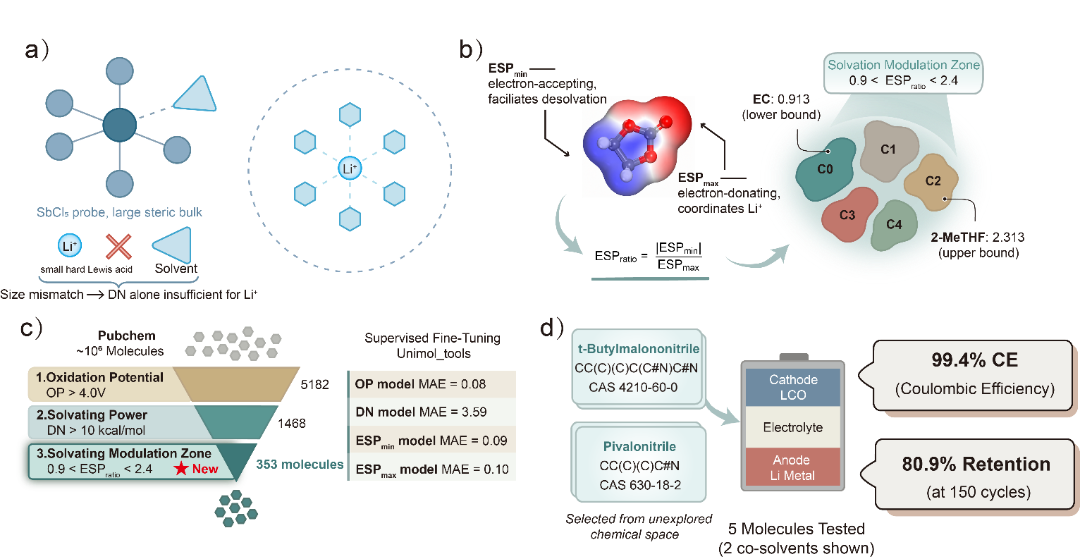
Figure 1. Workflow and experimental validation flowchart for solvent screening based on the quantitative ESPratio descriptor.
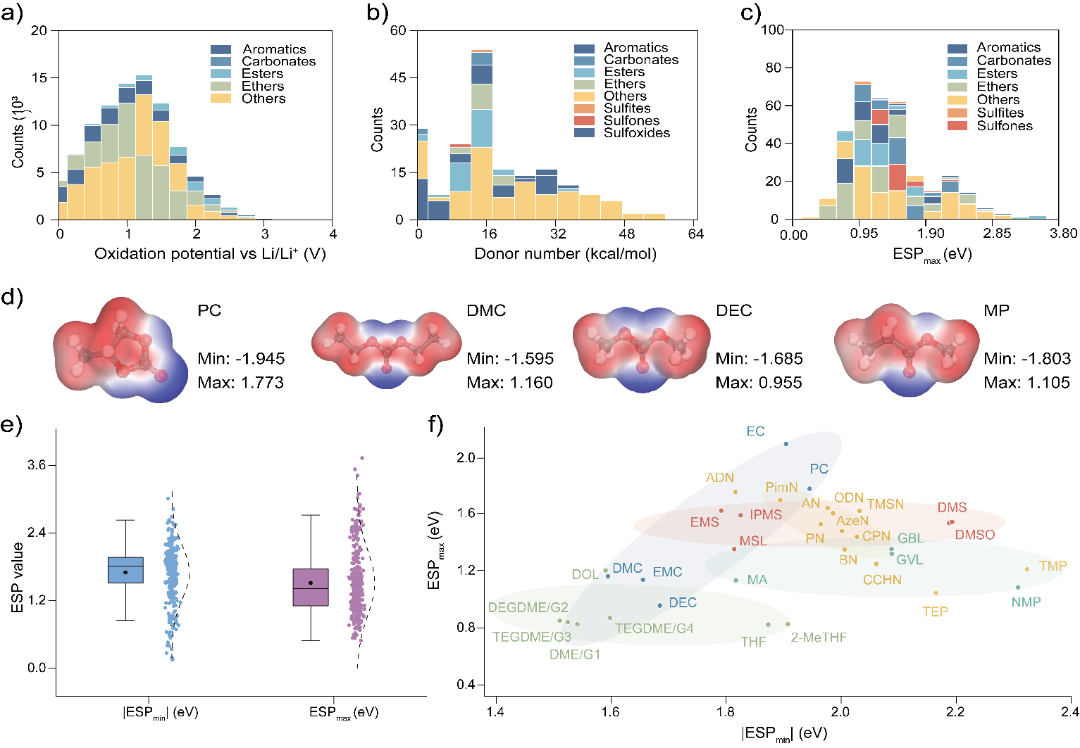
Figure 2. Dataset composition analysis and electrostatic potential distribution characteristics of solvent molecules.
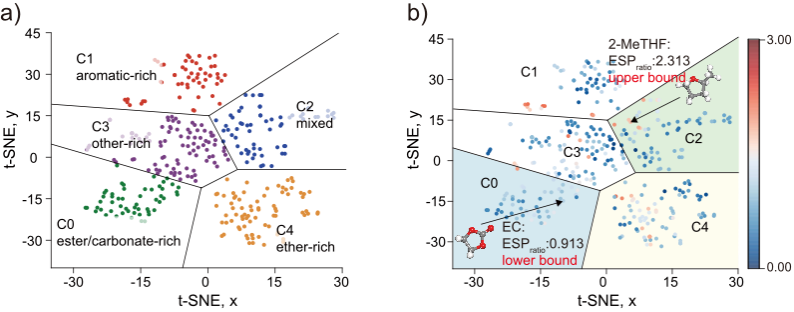
Figure 3. Mapping relationship between molecular structural space and the ESPratio descriptor revealed by t-SNE clustering analysis.
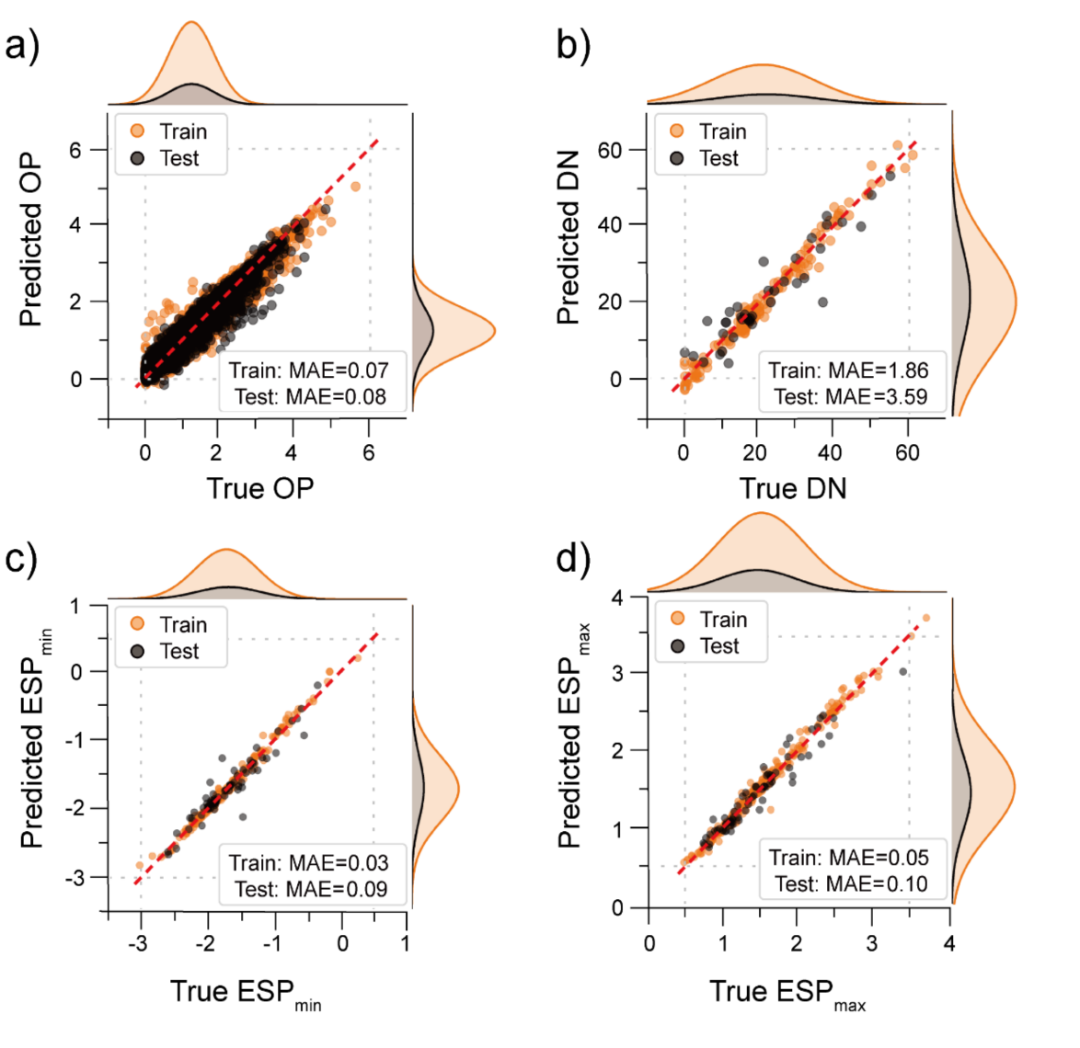
Figure 4. Accuracy validation of four Uni-Mol deep learning models in predicting key electrolyte properties.
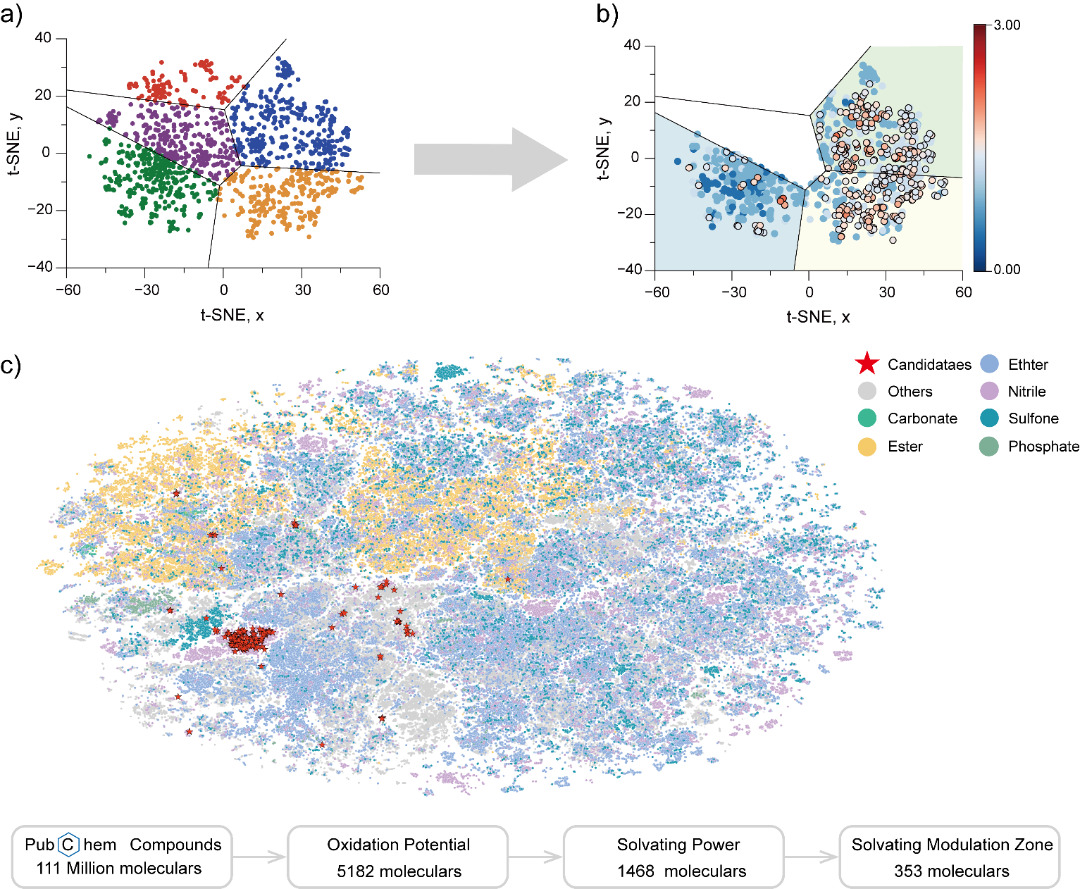
Figure 5. Three-tier hierarchical screening of the PubChem library, ultimately yielding 353 candidate molecules.
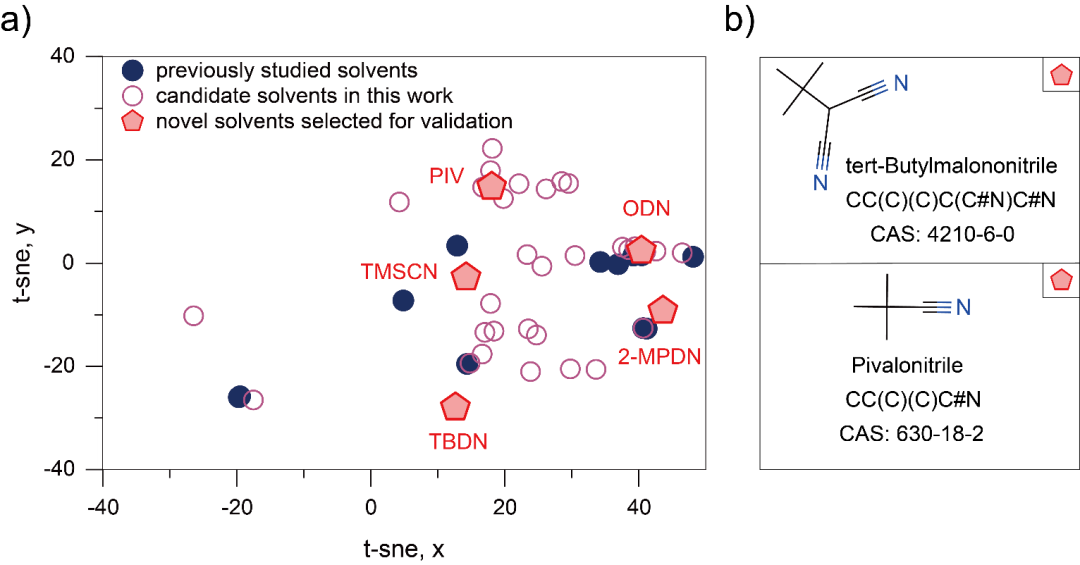
Figure 6. Chemical space distribution of the final candidate molecules and structures of representative experimentally validated molecules.
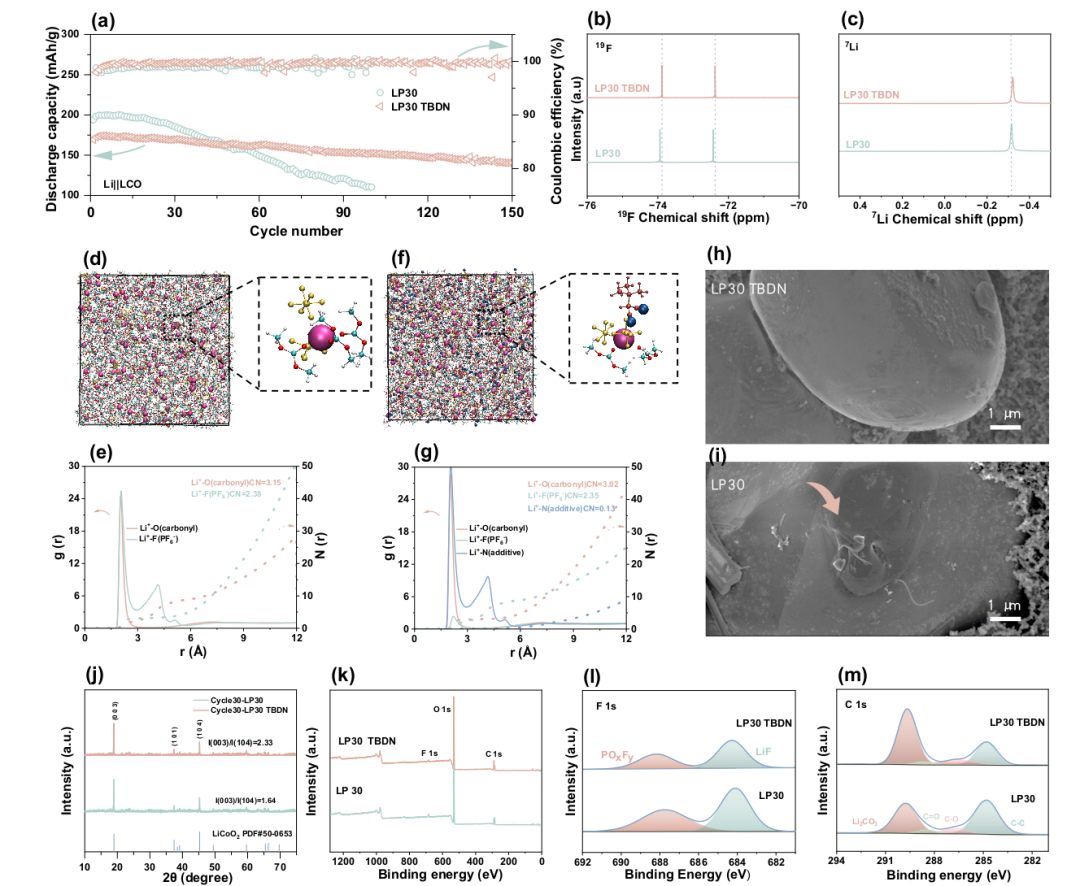
Figure 7. Improvement effects of the screened TBDN co-solvent on the performance and interfacial chemistry of high-voltage Li||LCO batteries.
Conclusion
This study successfully defines a new quantitative descriptor, the electrostatic potential ratio ESPratio (=|ESPmin|/ESPmax). Through unsupervised clustering analysis, the "solvation modulation zone" (SMZ) is determined to be 0.9 < ESPratio < 2.4 from 344 molecules (including 196 experimentally reported electrolyte solvents). Combined with a deep learning model based on the Uni-Mol architecture, a three-tier hierarchical screening of approximately 10^6 molecules in the PubChem database was conducted, ultimately yielding 353 candidate molecules. Experimental validation confirmed the effectiveness of five representative molecules (such as TBDN and PIV) as co-solvents or additives in high-voltage Li||LCO batteries, demonstrating that this ESPratio-guided workflow can effectively enrich chemically meaningful electrolyte candidates. This provides new theoretical tools and practical strategies for the rational design of high-performance electrolytes.
Reference Information
K. Han, Yu Lou, and J. Li, et al., Angewandte Chemie International Edition (2026): e6825619, https://doi.org/10.1002/anie.6825619 DOI: 10.1002/anie.6825619